Turn Passive Alumni Into Active Partners
Connect with alumni where they are, from digital spaces to in-person events, to grow participation and strengthen affinity.
Student & Alumni Engagement
Clinical & Experiential Education
Competency Management
Career Readiness
Manage Clinical & Non-Clinical Experiential Education
Centralize, Track, & Scale Real-World Experiences
Engage Alumni
Help Universities Strengthen Alumni Ties
Strengthen Career Readiness
Prepare Students for What’s Next
Improve Enrollment Yield
Relationships Shape Decisions
Improve Program Effectiveness
Insights That Drive Better Outcomes
Increase Student Retention
Keep Students Engaged & Enrolled
Foster Mentorship
Turning Support Into Student and Alumni Success
Schedule a Consultation
Discover how we can help you drive lasting impact across your program and institution.
Speak with an ExpertClinical Programs
Non-Clinical Programs
Departments
Blog
Read our blog to learn from thought leaders and practitioners.
Webinars & Events
Connect with us in person and virtually.
Client Stories
Read real stories and see real impact from universities and programs.
On-Demand Webinars
Join our webinars to hear from campus leaders and industry experts.
Resource Library
Explore industry whitepapers, research, and other resources to advance your mission.
Schedule a Consultation
Discover how we can help you drive lasting impact across your program and institution.
Speak with an ExpertEngage Alumni
June 30, 2026
Alumni Engagement
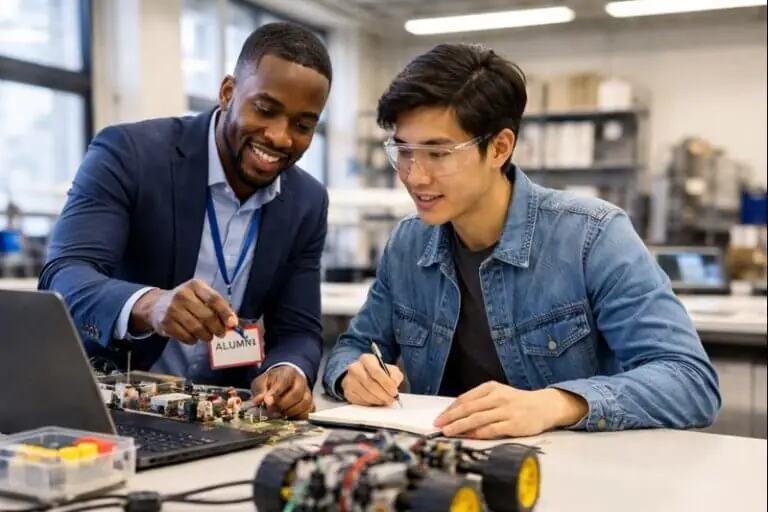
As colleges and universities strive to strengthen their relationships with graduates, alumni engagement has become a critical priority. PeopleGrove recently hosted a powerful conversation between Sarah Myksin and Casey Arnold, Vice President of Engagement at the University of Illinois Alumni Association (UIAA), centered on how institutions can meaningfully connect with alumni and measure that impact.
Alumni engagement refers to the ongoing relationship between an institution and its graduates through meaningful interactions, programs, and opportunities that foster connection beyond graduation. These interactions can include mentoring students, attending events, volunteering, participating in professional development, joining affinity groups, and making philanthropic contributions.
Engaged alumni are more likely to contribute their time, expertise, and financial support. Effective engagement helps institutions build lasting relationships and stronger communities.
From demographic shifts to engagement innovations, here are five key takeaways from the discussion.
The conversation opened with a sobering look at the state of alumni engagement in 2025. While only 7.5% of alumni now give to their alma mater—a steep decline from the 20% giving rates of the 1980s—interest in giving back hasn’t disappeared entirely. In fact, 68% of alumni give to other charitable causes, underscoring a fundamental disconnect between alumni and their universities.
Younger alumni in particular are turning away, with an 18% drop in giving rates over the last decade. The reason? Many feel that their institution’s outreach lacks relevance or value, often limited to donation appeals without deeper engagement. This disconnect is especially pronounced among recent graduates, 47% of whom feel alienated from their alma mater.
Casey Arnold emphasized that engaging today’s alumni requires flexibility, inclusivity, and mobile-first strategies. With a diverse alumni base of over 500,000 individuals, UIAA recognized that a one-size-fits-all approach no longer works.
According to research shared in the webinar, 75% of alumni are more likely to engage when platforms are mobile-friendly, and top requests from alumni include asynchronous opportunities like mentoring students, professional development, and one-time volunteer activities.
University of Illinois has responded by offering virtual alumni college programs, regional and identity-based networks, and opportunities for global connections—all powered by PeopleGrove. These initiatives are crafted to let alumni engage on their terms, whether they’re across the state or around the world.
One of the most compelling insights from the webinar was the proven link between non-financial engagement and future giving. Alumni who volunteer are seven times more likely to donate, highlighting that purpose-driven participation fosters lasting emotional ties.
This approach is especially crucial when engaging alumni of color, women, and graduates with student loan debt, who often face additional barriers to giving. UIAA is actively using focus groups and student interns to understand and meet the needs of these diverse groups, with a planned hire for an Assistant Director of Online Engagement to further scale personalized programming.
The shift to hybrid and online-first alumni relations isn’t a pandemic trend—it’s a long-term strategy. Casey highlighted a 51% year-over-year increase in online engagement at the University of Illinois, attributing this growth to the platform’s ability to create scalable, personalized experiences that complement in-person events.
PeopleGrove plays a central role in this transformation. By enabling virtual mentoring, curated professional development opportunities, and asynchronous engagement, the platform meets alumni expectations shaped by modern digital experiences. It also empowers alumni to reconnect not only with their university but also with each other.
The final takeaway from the webinar was both philosophical and practical: alumni relationships are higher ed’s most underutilized asset. When nurtured effectively, these connections drive not only philanthropy but advocacy, volunteerism, and brand loyalty over a lifetime.
Institutions that invest in diverse engagement strategies—those that go beyond annual giving asks—will see dividends in the form of long-term support. As Casey put it, the goal is not just to track donations, but to measure impact holistically. UIAA uses CASE engagement metrics and platform analytics to assess outcomes, inform programming, and demonstrate value to stakeholders.
As giving rates decline, the higher education sector must rethink their approach to alumni engagement. The April 10th conversation revealed that by listening to alumni needs, providing mobile and flexible ways to engage, and recognizing the value of time and talent, institutions can build enduring connections that fuel advancement efforts for decades to come.
As institutions look to scale alumni engagement, technology plays a critical role in creating meaningful connections. Platforms like PeopleGrove's Engagement Hub help colleges and universities facilitate mentoring, networking, volunteer opportunities, and career support while measuring engagement outcomes over time.
Discover how PeopleGrove can help your institution deliver on the promise of a higher education degree across the student-to-alumni lifecycle. Contact us today for a personalized consultation.
Browse more research and insights.

Strengthen Career Readiness
8 min read

Manage Clinical & Non-Clinical Experiential Learning
7 min read

Manage Clinical & Non-Clinical Experiential Learning
5 min read